Early Career Faculty Opportunities
The University of Alaska has awarded 13 Early Career Faculty (ECF) Fellowships to support the Arctic Leadership Initiative (ALI).
In addition to augmenting UA’s research capacity, these awardees are part of a leadership team drawn from all three UA universities and across the state to implement ALI. ECF Fellows work closely with faculty mentors, external partners, and student teams to solve problems and advance opportunities in the Arctic.
2026-2028 ECF Fellows
Four new Early Career Faculty Fellows have been selected for two-year appointments beginning Summer 2026. Their work expands ALI's research footprint across family resilience, international polar partnership, Arctic economic research, and Alaska's seasonal workforce.
Mariah Seater (UAF) LinkedIn
Dr. Mariah Seater's research examines how climate change shapes the health and resilience of Arctic families. Her work intersects public health, family systems, and the lived experience of climate disruption across rural and Indigenous Alaska communities.
Seoyeon Kim (UAF) LinkedIn
Dr. Seoyeon Kim studies how Arctic amplification drives Alaska wildfire risk through increased lightning. She uses global climate models and high-resolution regional downscaling to isolate how sea ice loss and warming sea surface temperatures precondition extreme convective weather events.
Amy Cross (UAA) LinkedIn
Dr. Amy Cross focuses on Arctic economic research and community-engaged undergraduate scholarship. Her appointment integrates economic analysis with hands-on student research opportunities, building Alaska's pipeline of Arctic-fluent economists and policy analysts.
Xiaofei Song (UAS) LinkedIn
Dr. Xiaofei Song's research addresses career decision-making among Alaska's seasonal workforce, examining how workers in fisheries, tourism, and other cyclical industries navigate long-term career paths in a state defined by economic seasonality.
2025-2027 Cohort (Year 2)
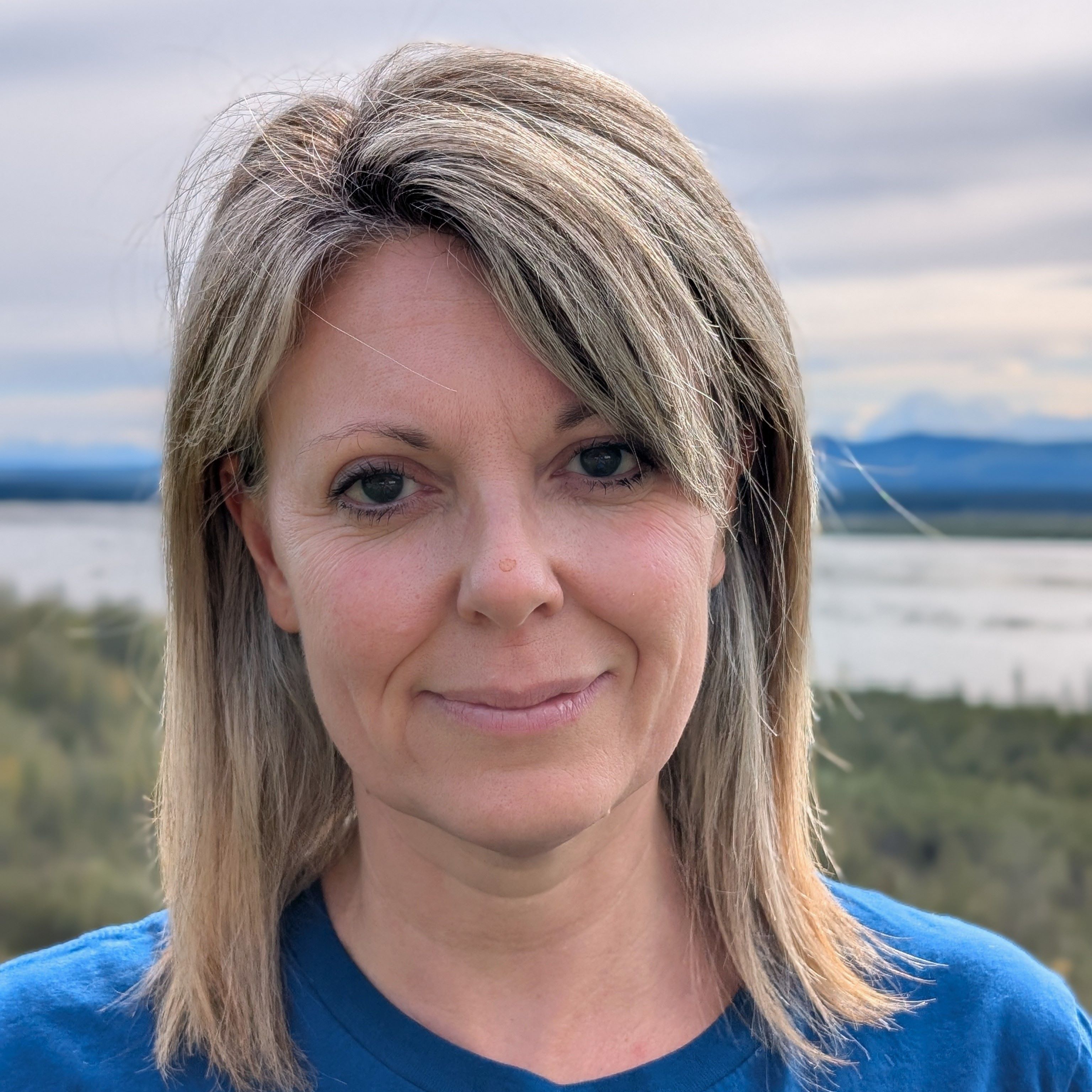
Her research focuses on the complex interplay between climate, water, and sediment fluxes in river systems. Ongoing changes in Alaska—including intense precipitation, permafrost thaw, and glacier melt—suggest increased erosion and river sediment loads. Similar trends have been observed in other cold regions, with potential significant impacts on ecosystems, fish habitats, and infrastructure. By integrating field data, remote sensing, and advanced modeling, Anna aims to develop predictive models of hydrology and sediment transport in rapidly changing Arctic and sub-Arctic rivers.
She is dedicated to mentoring and supporting students through advising graduate students, teaching graduate-level courses, and leading workshops and other educational activities.
More about Anna Costa
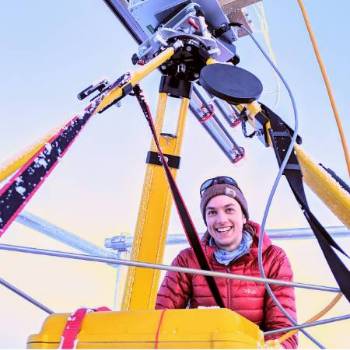
My current research builds on this doctoral work, aiming to continue to better understand sea ice deformation at intermediate spatial scales. I am particularly interested in landfast sea ice, the area of stationary ice contiguous with the coastline that is integral to wintertime subsistence activities and travel in many Arctic coastal communities.
- Anna Costa (UAF), who studies the interplay between climate, erosion, and sediment fluxes in rapidly changing Arctic river systems. LinkedIn
- Emily Fedders (UAF), studying sea ice deformation at scales of meters to kilometers using combined radar remote sensing and field observations. LinkedIn
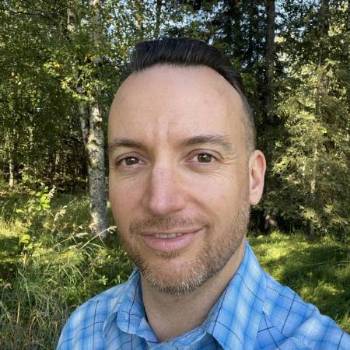
- Colin T. Maher (UAA), focusing on the ecology of trees and forests in boreal and mountain environments, including Arctic and alpine treelines, the northern and elevational limits of trees. LinkedIn
Amy D. Holt (UAS) was an ECF Fellow in 2025-26.
Founding Fellows, 2024-2026
ALI gratefully acknowledges its founding ECF Fellows, whose two-year work has helped establish ALI as a functioning, system-wide platform.
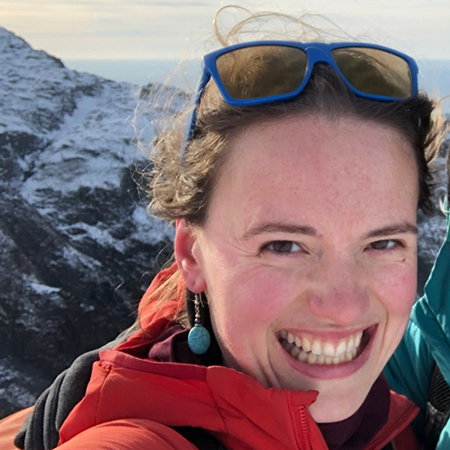
Megan Behnke was born and raised here in Lingít Aaní. She first joined UAS as a stream chemistry technician in 2016 with the Alaska Coastal Rainforest Center, and returned in 2022 to serve as postdoctoral fellow through the Coastal Rainforest Margins Research Network and the Alaska Climate Adaptation Science Center. In between she received her MS and PhD from Florida State University, studying what happens when warming temperatures release organic carbon that has been locked away in permafrost, glaciers, and wetland soils in both coastal temperate rainforests and around the pan-Arctic with the Arctic Great Rivers Observatory. Megan uses a combination of ultrahigh resolution mass spectrometry and elemental and isotopic ratios to explore how the sources, processing, and fates of organic matter are changing due to climate change and associated shifts in land use and land cover.
Megan's current research interests include understanding how cryospheric warming (i.e.
glacial melt and permafrost thaw) is changing the type and delivery of organic matter
to streams and to the nearshore environment and the role human actions (such as fossil
fuel burning) have on organic matter cycling. She is also interested in understanding
the role of trees in delivering dissolved organic matter to forest floors, stream
systems, and the nearshore environment. In addition to research, Megan spends her
time paddling, skiing, climbing, gardening, reading (particularly science fiction)
and bushwhacking around the forest trying to find her dog.
Learn more about Megan Behnke
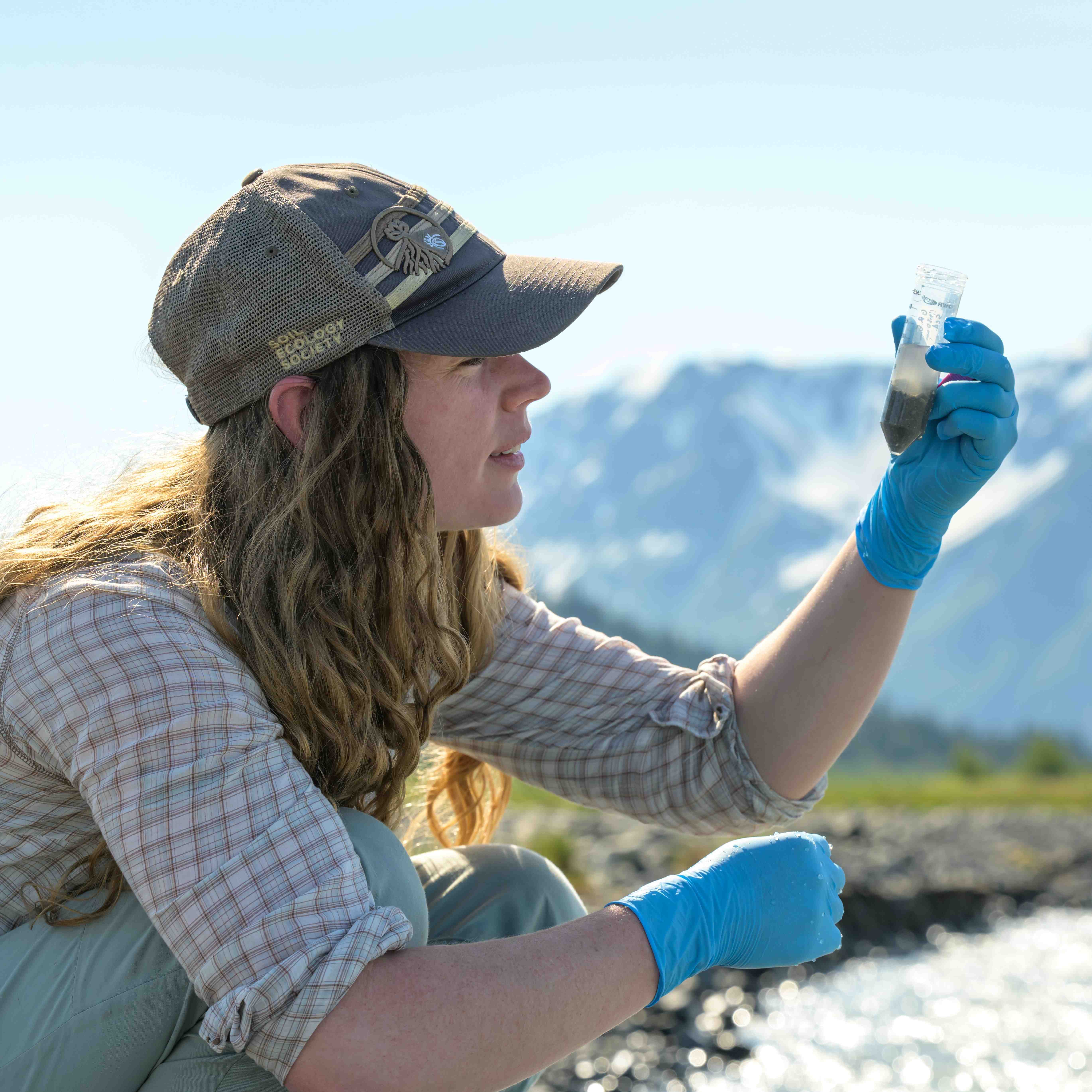
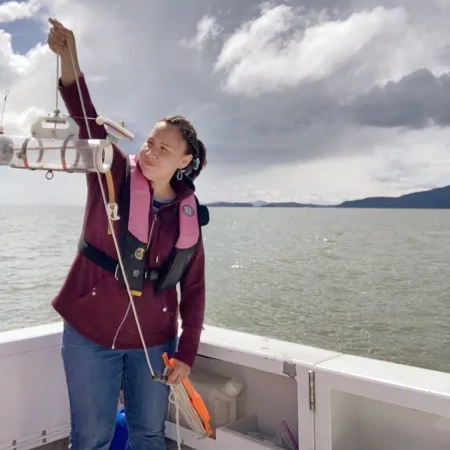
I am a new postdoc at the International Arctic Research center at the University of Alaska Fairbanks. Currently, I am funded through the Arctic-Yukon-Kuskokwim Sustainable Salmon Initiative. Environmental DNA (eDNA) is genetic material shed by organisms in their natural environment. It is possible to use eDNA to detect species of interest in ecosystems. I use environmental DNA techniques to both (1) study the declining salmon runs that have caused severe hardship in subsistence communities within the Arctic-Yukon-Kuskokwim (AYK) region and (2) quantify clam abundance that has been a hardship to the intertribal Chugach Regional Resources Commission and scientists at the Alutiiq Pride Marine Research Institute. I will use a previously published quantitative polymerase chain reaction (qPCR) assay to detect salmon. I plan to develop an assay for clam eRNA.
The detection of eDNA, using qPCR, needs to be statistically validated. I will fit
statistical models to predict daily salmon passage using eDNA concentrations. The
outcomes of the research aim to inform tribal members of salmon abundance in the Kuskokwim
River Basin. For quantification of eRNA, experiments will be run at the Alutiiq Pride
Marine Research Institute to quantify and differentiate between larvae, juveniles
and adults.
More about Brandi Kamermans
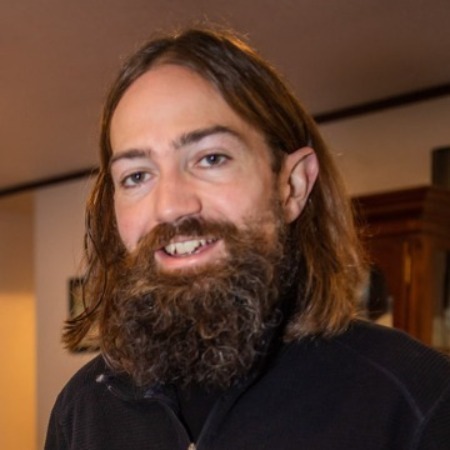
Dr. Rick Lader is a Research Associate with the International Arctic Research Center
at the University of Alaska Fairbanks. He earned his Ph.D. in Atmospheric Sciences
from UAF in 2018, focusing on the emergence of rapidly changing climate extremes in
Alaska. Dr. Lader’s research agenda involves the development of high-resolution datasets
for Alaska, suitable for the analysis of historical and projected climate states.
He has served as lead author on seven peer-reviewed publications on topics related
to Alaska’s climate and he has contributed to high-profile assessments, like NOAA’s
Arctic Report Card. Dr. Lader is actively leading projects involved with heat and
wildland fire extremes, and climate resilience in Alaska.
Learn more about Rick Lader
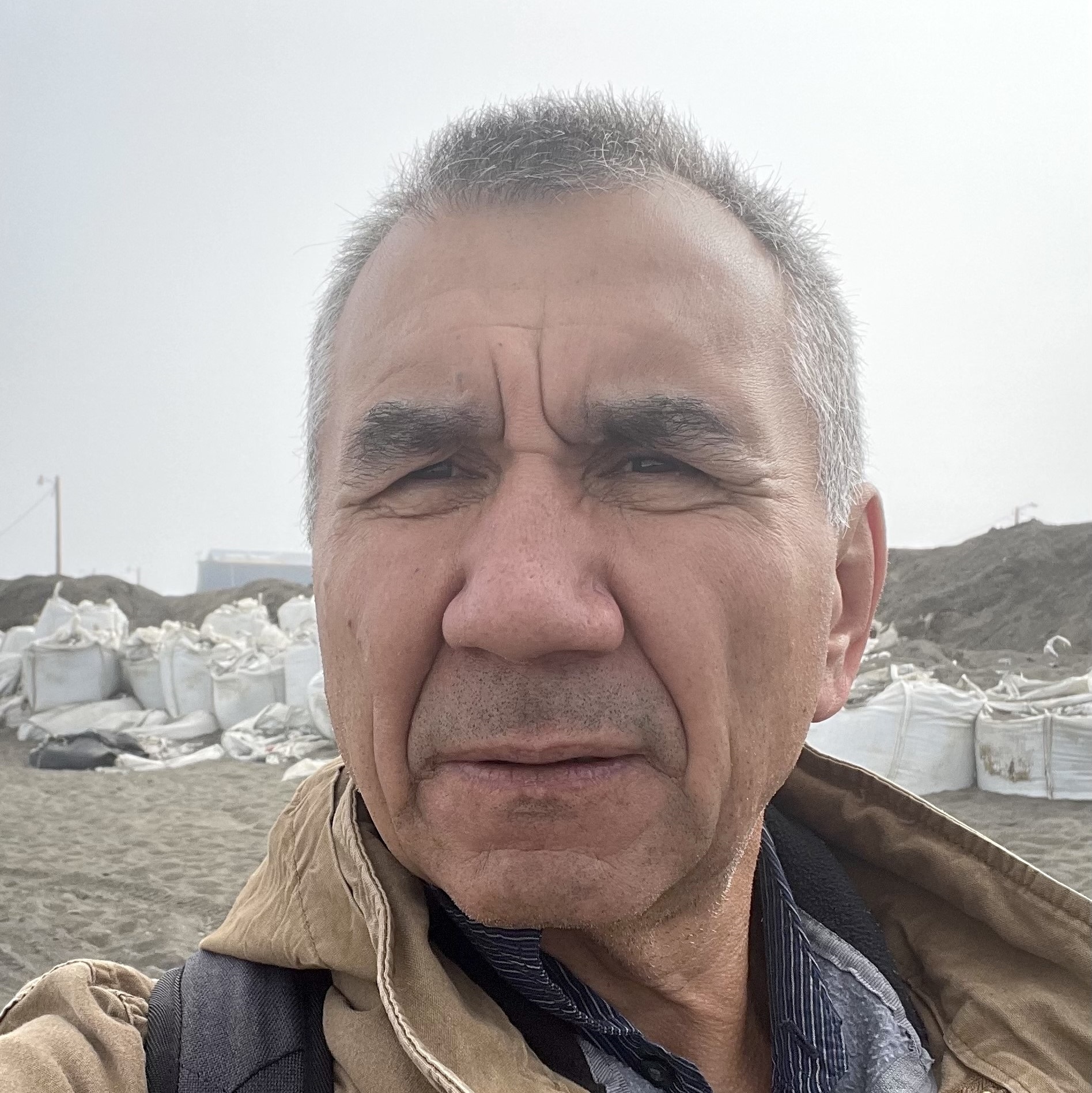
- Megan Behnke (UAS), researching the effect of glacial melt and permafrost on streams and nearshore environments. Megan continues with ALI as a Research Affiliate and ECF Advisor. LinkedIn
- Memphis Hill (UAA), studying sustainable critical mineral extraction methods in the Arctic. LinkedIn
- Brandi Kamermans (UAF), studying salmon assessment based on DNA shed. LinkedIn
- Rick Lader (UAF/IARC), who studies extreme climate events in the Arctic related to wildland fire. LinkedIn
- Eduard Zdor (UAF), who conducts circumpolar research about protecting traditional subsistence rights. LinkedIn
One of the Board of Regents’ strategic priorities, the Arctic Leadership Initiative (ALI) positions Alaskans as world leaders in the Arctic, giving students and early career professionals the foundation and network needed to lead in the changing Arctic, and enhancing the reputation of UA’s universities as centers of Arctic expertise.
Follow ALI on LinkedIn for deadlines, lectures, and news from the cohort and Fellows.
Follow on LinkedIn