
Did you know UAA engineers and computer scientists are using AI to decode brain signals?
Rebecca Lawhorne
ralawhorne@alaska.edu
October 1, 2026
Graduate student Vadim Egorov sits in a lab, wearing a black headset resembling a beanie, fitted with bristle-tipped sensors. Behind him, jagged blue lines ripple across the projector screen, a live readout of his brain's electrical activity. This isn’t something out of a science fiction movie. It is an EEG system training session in UAA's College of Engineering AI and Robotics (AIR) Lab. The team will be using the device to study brain activity.
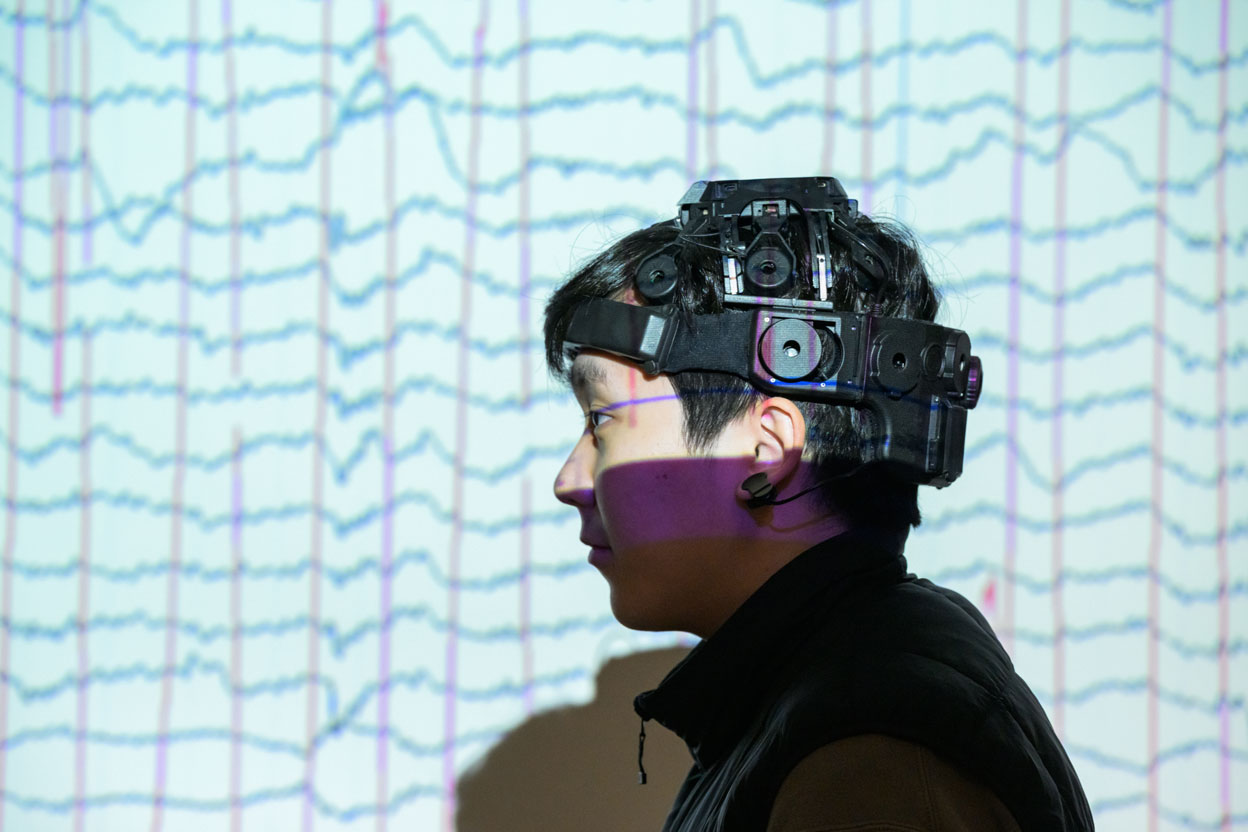
The headset is the newest research tool in the AIR lab, which recently introduced the system, and they are exploring collaborations at UAA to help put it to use across multiple research sectors.
Why it matters: UAA researchers can now collect their own brain data here in Alaska, designed around their own questions on topics such as how people read, learn, manage disabilities and solve problems.
Where it came from: Funding for the DSI-24 was made possible by a donation from the Educational Legacy Fund.
How it works: The device is a Wearable Sensing DSI-24 electroencephalogram, or EEG, system.
- Brain cells communicate through tiny electrical signals. The headset's sensors detect that activity at the scalp.
- It is a dry system, with no conductive gels or skin preparation, so setup is quicker than using a wet system.
- EEG will not read your thoughts. It captures broad patterns of brain activity as a person focuses, relaxes or works through a problem.
Where AI comes in: EEG data is noisy. Machine learning helps researchers separate meaningful patterns from noise caused by factors like a participant moving their jaw while wearing the device. They can then link these patterns to specific cognitive states and activities.
What they're saying: "These technologies are advancing very quickly, and I want our students to have opportunities to work with emerging tools and contribute to research at the forefront of AI, brain-computer interfaces and neurotechnology," Masoumeh Heidari, Ph.D., assistant professor in the College of Engineering, told UAA's Green and Gold News.
"Right now when I work with EEG data, I'm usually getting it from publicly available sources, so I'm excited to be able to collect my own data for my own tasks," said Egorov, an AI, data science and engineering graduate student.
First up: According to UAA, two early projects will use the system.
- One will estimate cognitive states in people with disabilities or in those with neurological and developmental conditions during reading tasks.
- Another will track brain activity and eye movement as people write computer code.
What’s next: Engineers can build the models and run the analysis. Studies involving people could include research partners in health care, psychology, education and disability services.
"If you think about healthcare, for example, we're interested in working with people with disabilities. So there's a natural tie-in with psychologists, educators and healthcare practitioners — they have that domain expertise and experience working with human subjects. We can collaborate on conducting experiments and performing the technical analysis," said Kenrick Mock, Ph.D., dean of the College of Engineering.
As the headset transitions from training sessions to real-world studies, researchers outside engineering may soon be collecting brain data in Alaska, for Alaska.
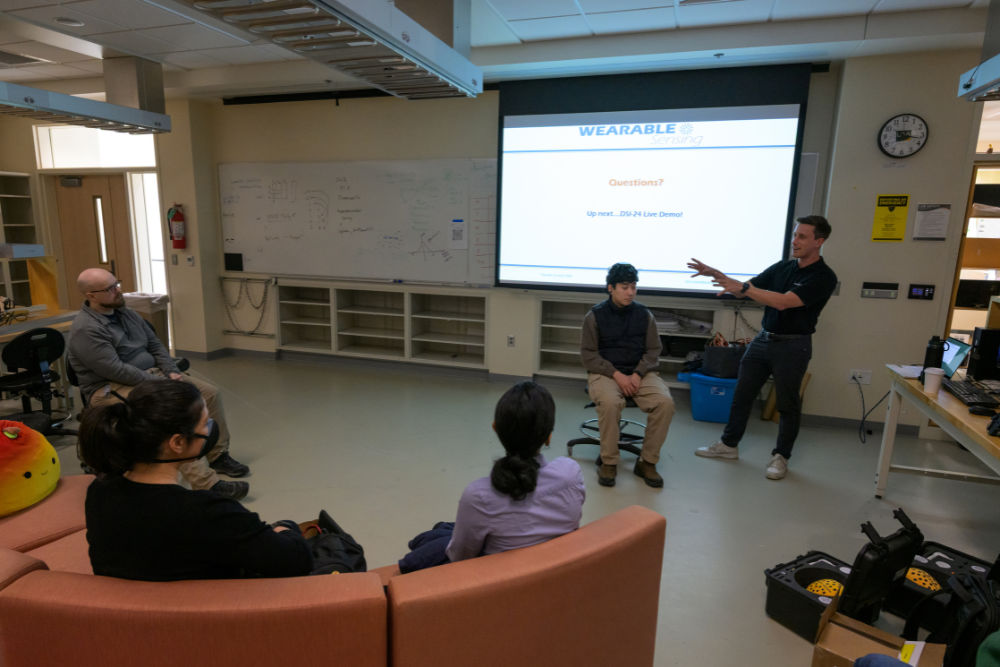
Cameron Sacks, a Wearable Sensing representative, walks through the DSI-24 setup guide with faculty and staff in UAA's Artificial Intelligence and Robotics (AIR) Lab. (Photo by James Evans / University of Alaska Anchorage)
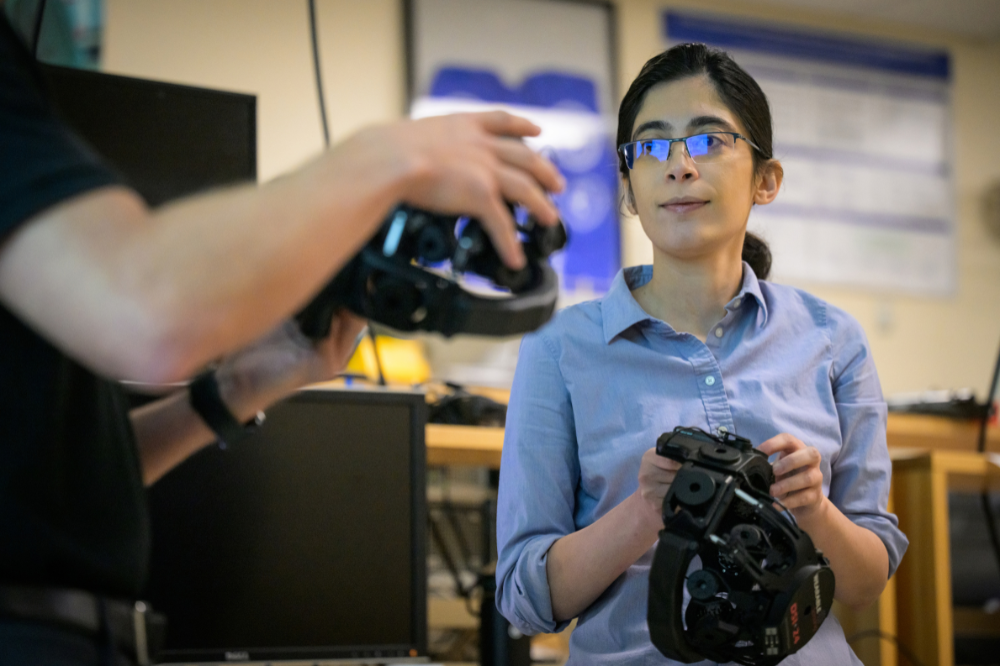
Masoumeh Heidari, Ph.D., assistant professor of computer science and computer systems engineering, holds one of the AIR Lab's new DSI-24 dry electrode EEG headsets during training. (Photo by James Evans / University of Alaska Anchorage)
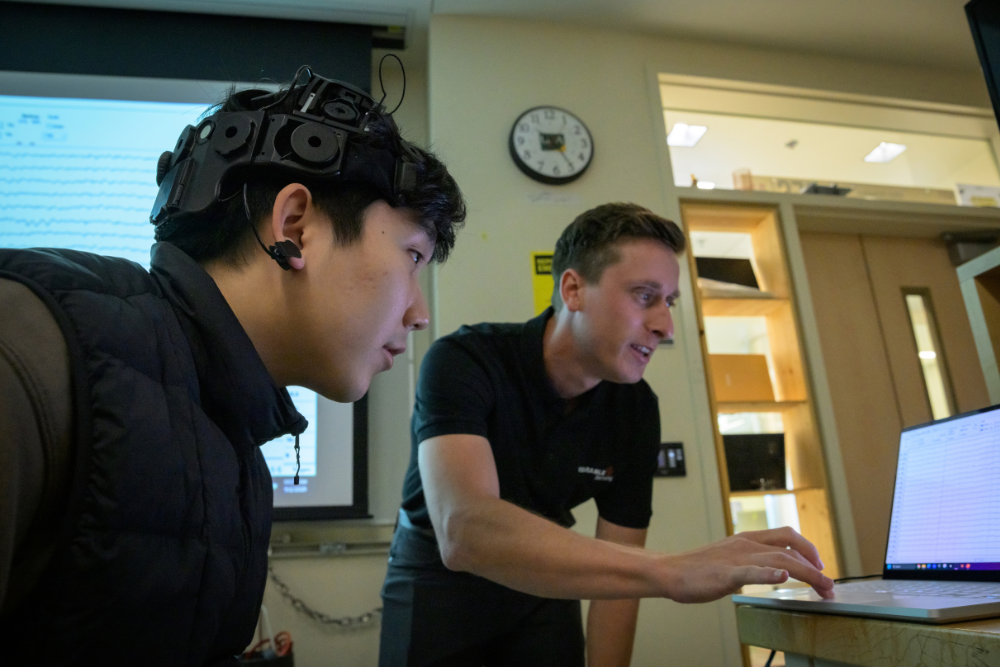
Cameron Sacks shows engineering student Vadim Egorov live data. (Photo by James Evans / University of Alaska Anchorage)
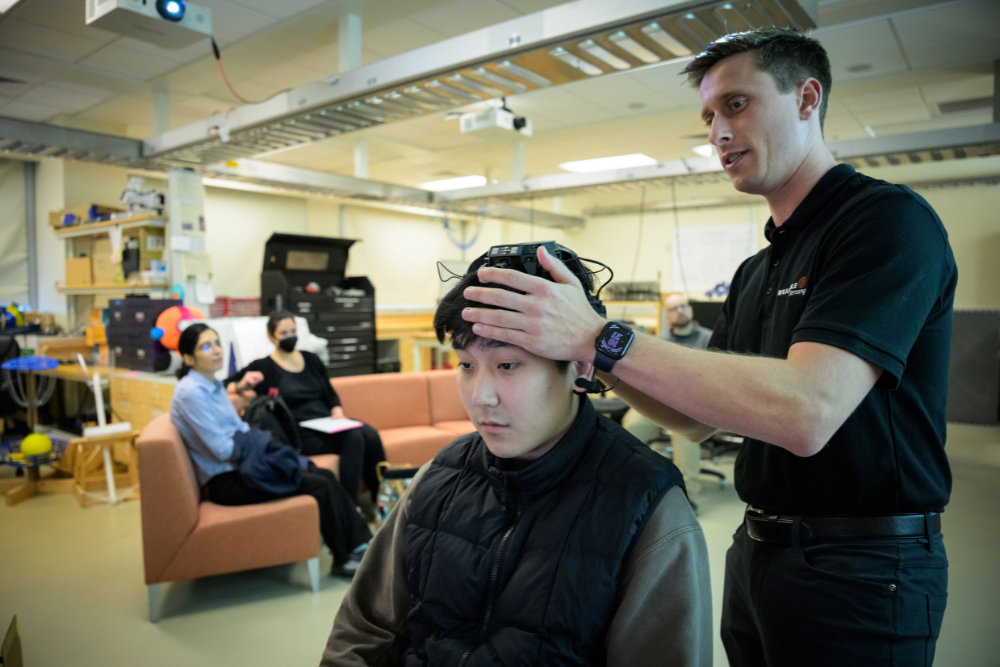
Cameron Sacks adjusts the fit of a DSI-24 headset on engineering student Vadim Egorov. (Photo by James Evans / University of Alaska Anchorage)
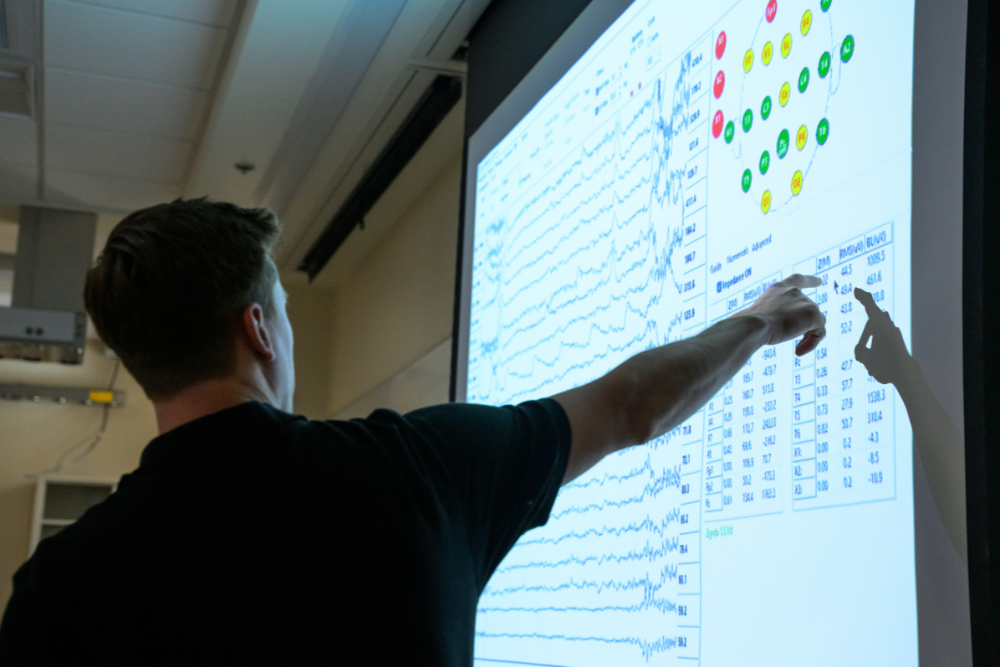
Cameron Sacks points to live EEG readings during a training session in UAA's AIR Lab. The software shows brain-activity signals alongside a color-coded map of the headset's sensors. (Photo by James Evans / University of Alaska Anchorage)